
Drywall Repair Tips That Actually Work
Drywall takes a beating in real homes. Doors get bumped. Furniture gets moved. Small cracks show up. If you live in Ottawa, the freeze-thaw cycle can make those cracks spread faster than you’d expect. Good drywall repair is not just “patch and paint.” It keeps your walls solid, clean, and looking sharp.
Let’s break it down in a simple, practical way.
Why Drywall Repair Matters More Than You Think
It’s easy to ignore a small crack. But little problems often turn into bigger repairs when moisture, movement, or temperature swings get involved.
- Tiny cracks can grow with seasonal expansion and contraction
- Moisture can get behind the wall and create mold risk
- Loose drywall can reduce comfort and insulation performance
A smooth, solid wall isn’t only about looks. It helps protect your home from bigger damage later.
Common Drywall Problems You’ll See
If you’re a homeowner, you’ve probably seen at least one of these:
- Nail pops: Small bumps where fasteners push through the surface
- Stress cracks: Often near doors, windows, ceilings, and corners
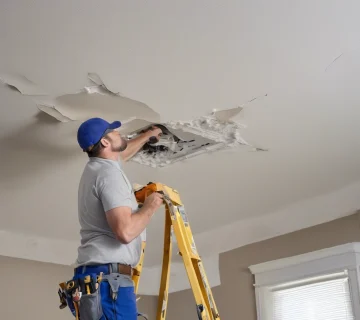
- Water damage: Stains, bubbles, soft spots, or sagging areas
- Holes: From moving furniture, accidents, or everyday wear
Each one needs the right approach. The goal is a flat surface that disappears after paint.
Tools and Materials for Drywall Repair
Having the right kit makes drywall repair faster and cleaner:
- Joint compound
- Putty knife (and a wider knife for feathering)
- Sanding sponge or sanding block
- Drywall tape (paper or mesh)
- Utility knife
- Patch kit (for larger holes)
- Primer and matching paint
Step-by-Step: How to Fix Common Drywall Issues
Small Cracks and Nail Pops
- Scrape out loose material and clean the area.
- Apply a thin coat of compound.
- Let it dry, then sand smooth.
- Add a second coat if needed and feather the edges wider.
- Prime and paint.
Tip: Feather wider than you think. That’s what makes the patch disappear.
Bigger Holes (Fist-Sized or Larger)
- Cut the damaged area into a neat square or rectangle.
- Fit a drywall patch to match the opening.
- Add a wood brace behind the hole for support.
- Screw the patch into place.
- Tape seams, then apply compound in thin layers.
- Sand smooth, then prime and paint.
Tip: Don’t rush drying. Fast sanding on wet mud makes a bigger mess.
When It’s Time to Call a Pro
DIY is fine for small fixes. But call a professional if you have:
- Serious or recurring water damage
- Cracks wider than 1/4 inch or cracks that keep returning
- Sagging ceilings or signs of structural movement
Pros have the tools and experience to restore walls quickly and smoothly — without trial-and-error and rework.
Keep Your Walls in Top Shape
Quick touch-ups save money over time. Fix small cracks early. Patch nail pops before they spread. And if something looks like moisture, don’t paint over it — find the cause first.
Final Thoughts
Your walls show real life. Dings and cracks happen. Staying on top of drywall repair keeps your home looking clean and feeling solid.
Do it yourself for the small stuff. And when the damage is bigger, call someone who fixes drywall every day.